
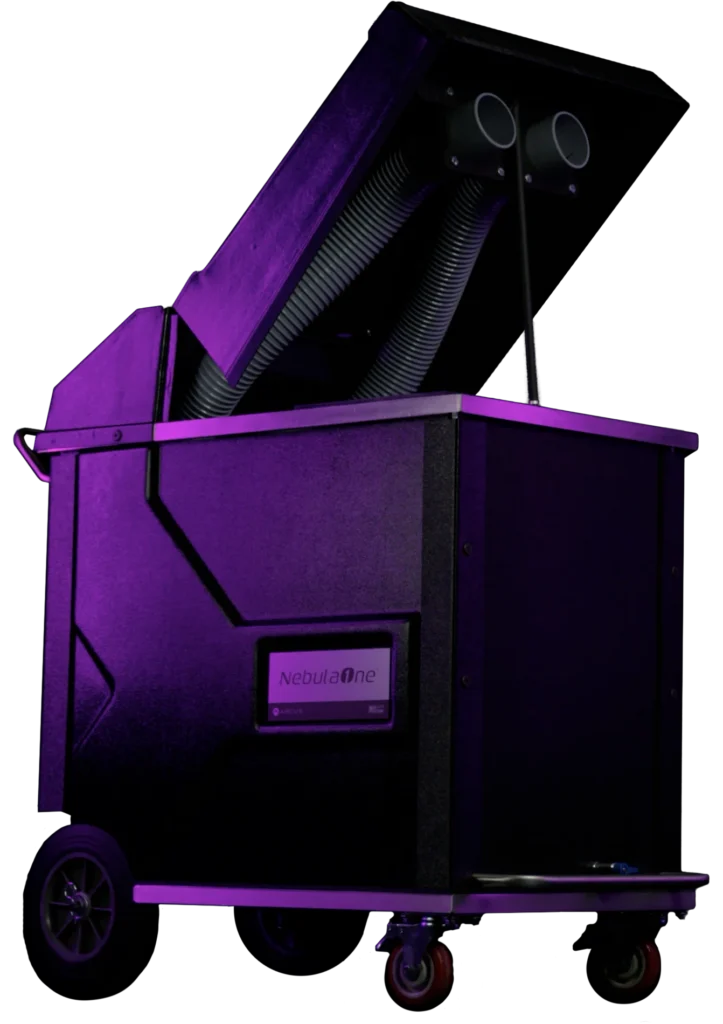
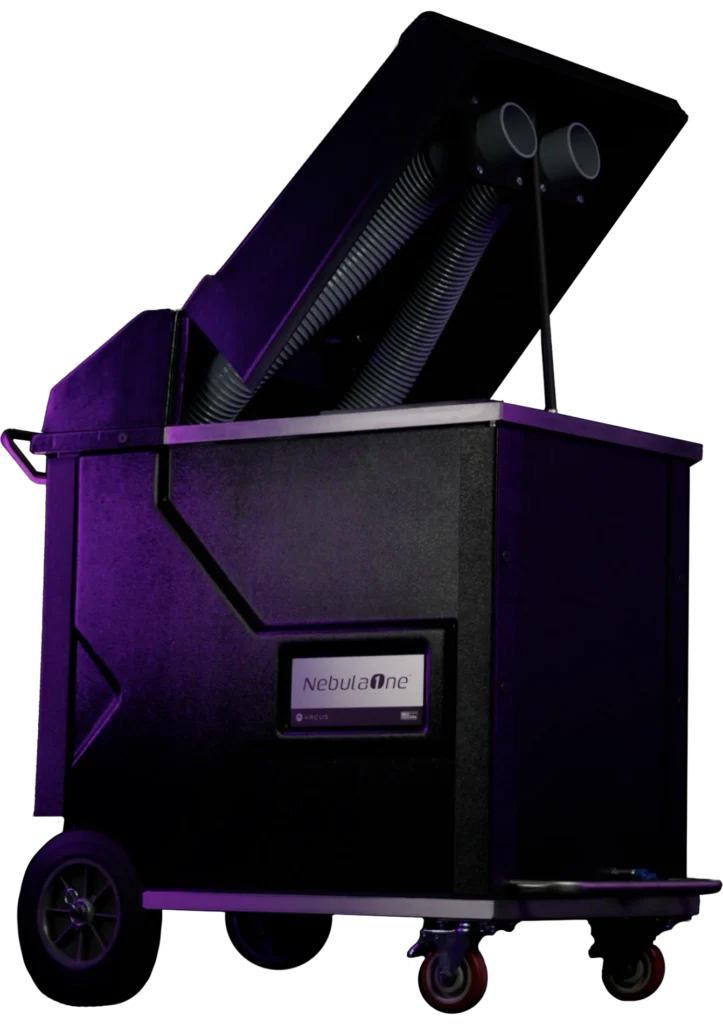
ARCUS | FOOD PROCESSING
THE CONTAMINATION CHALLENGE
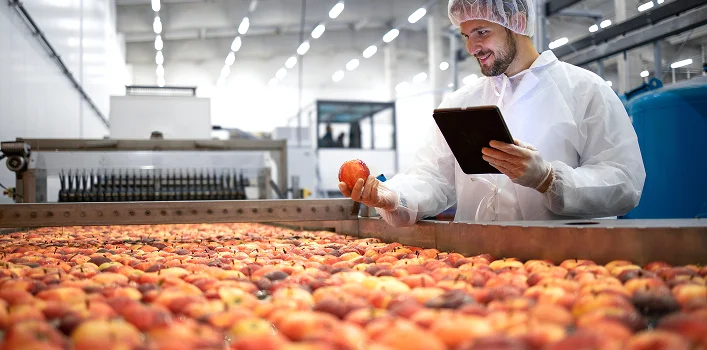
Full SSOP cycles demand equipment teardowns, chemical contact time, rinse cycles, and drying — each step cuts into production capacity.
Quats leave residue on food-contact surfaces. PAA corrodes equipment and produces harmful fumes. Both require PPE.
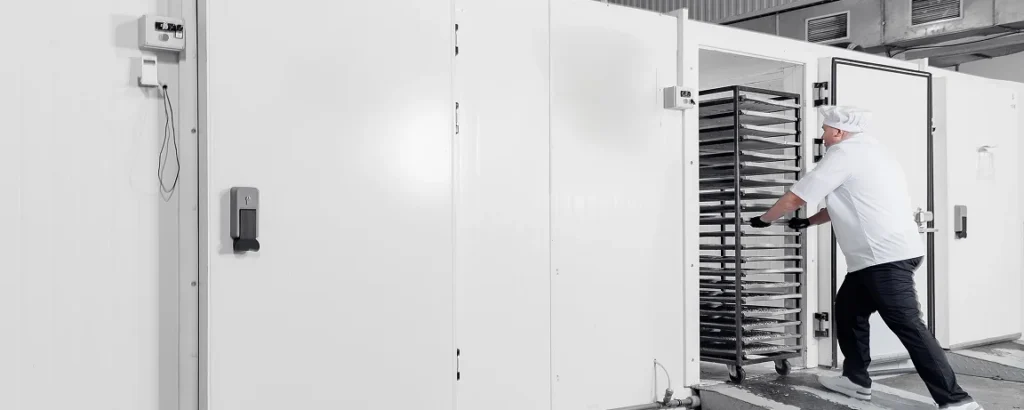
Wet cleaning introduces residual condensation into dry processing environments — creating ideal conditions for mold and yeast to take hold.
THE SOLUTION FOR FOOD PROCESSING

Automated delivery means no shift-to-shift variability. Consistent performance your team can count on, every cycle.
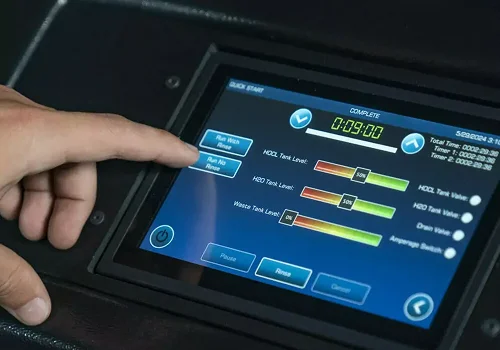
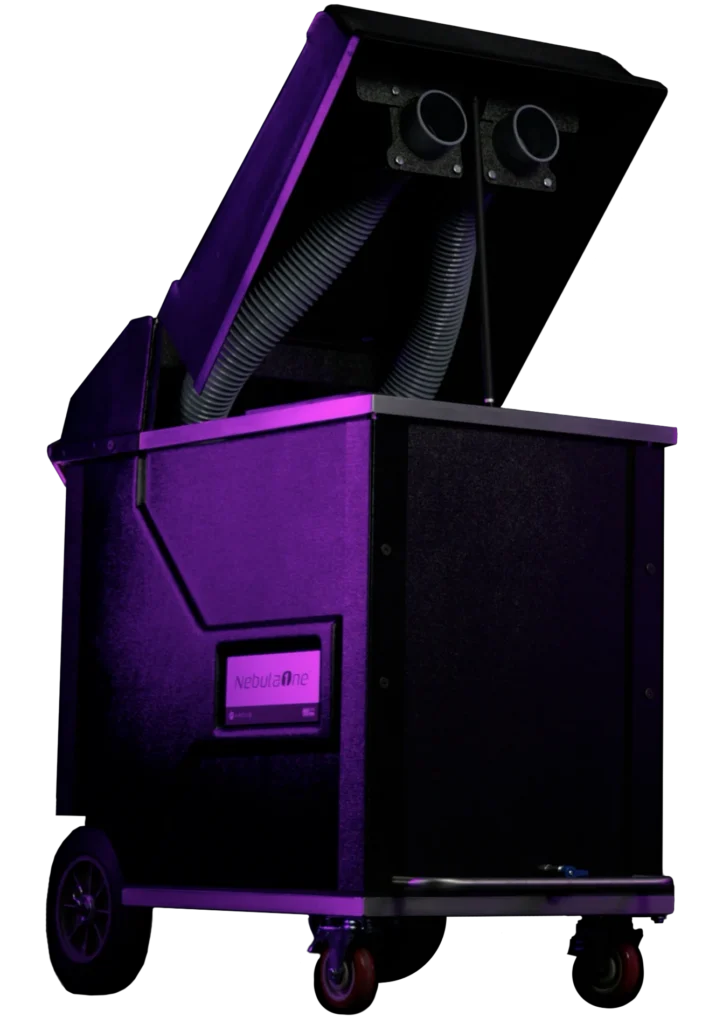
Activate with a single touch. No specialized training, no complex protocols. Engineered to fit the way your team already works.
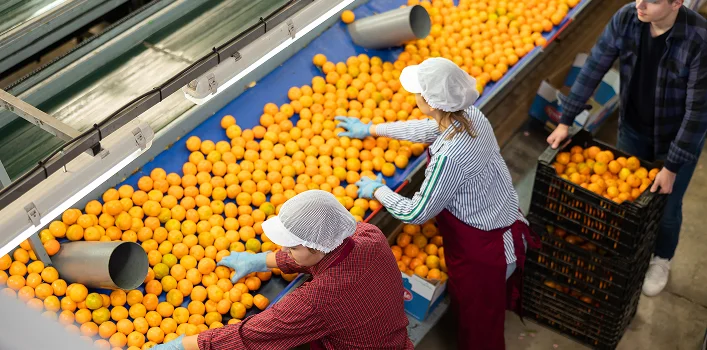
No harsh chemicals, no PPE, no residue on food-contact surfaces. Safe for your people, your production, and your equipment.
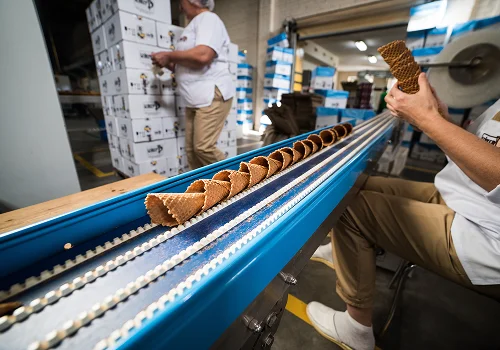
Treat up to 10,000 sq. ft. in under 10 minutes. Run between shifts, during changeovers, or alongside active production.
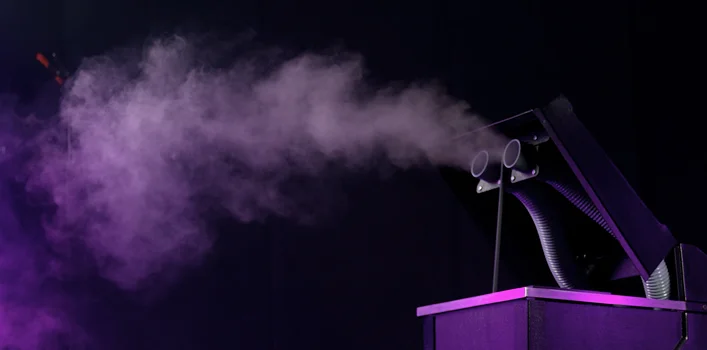
Wet methods create moisture, condensation, and the conditions mold and yeast need. Dry vapor neutralizes pathogens and leaves nothing behind.
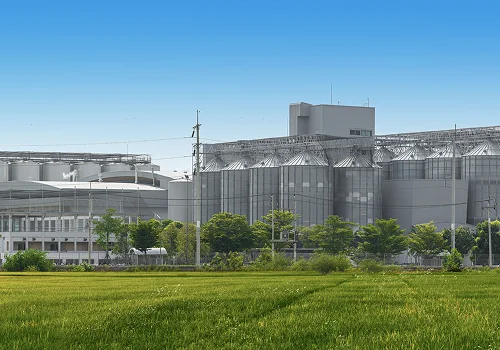
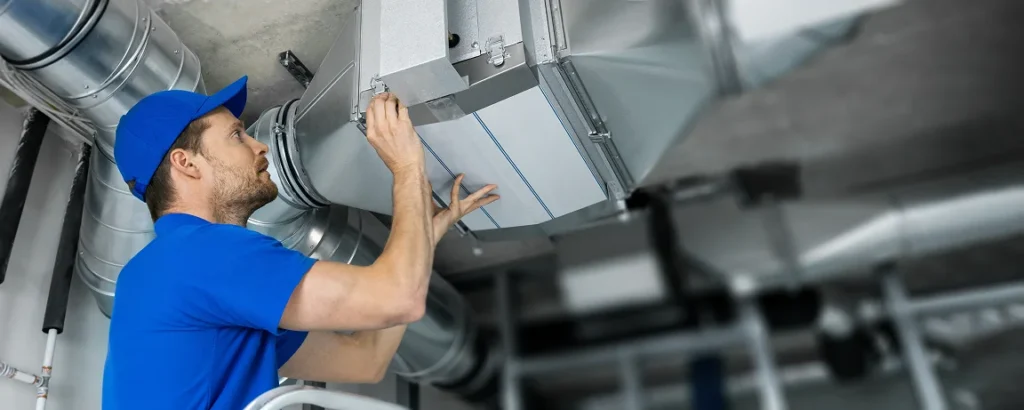
From conveyor undersides to ductwork and equipment interiors, dry vapor reaches surfaces manual treatment physically cannot access.
Job/Industry
Common questions about NebulaOne in food processing environments.
Yes. NebulaOne uses EPA-registered hypochlorous acid (HOCl) delivered as a dry vapor that is non-toxic, non-corrosive, and residue-free. It can be used safely around food, packaging lines, and stainless-steel surfaces with no rinsing or wipe-down required. HOCl breaks down into simple saline after disinfection, leaving nothing behind on food-contact surfaces.
No. NebulaOne’s dry vapor technology produces ultra-fine 2-3 micron particles that do not add moisture to the air or leave condensation on surfaces. It will not alter ambient humidity, temperature, or environmental conditions in your facility. This makes it safe for use in dry processing environments, around proofers, cooling tunnels, and refrigeration systems where moisture control is critical.
No. NebulaOne is designed to complement your existing sanitation program, not replace it. Manual cleaning addresses visible soils and organic matter. NebulaOne adds a continuous layer of protection between SSOP cycles by neutralizing pathogens on surfaces and in the air that manual methods can’t reach. It strengthens what your sanitation team already does without requiring protocol overhauls.
NebulaOne can reduce your facility’s reliance on chemical sanitizers by providing continuous, residue-free sanitation between manual cleaning cycles. It eliminates the residue, corrosion, and worker-exposure concerns associated with quats, PAA, and other chemical agents. However, it is not a replacement for all chemical sanitation. Your existing SSOPs and any required chemical applications remain in place. NebulaOne reduces how much of the job those chemicals need to carry.
Yes. While NebulaOne is not a mechanical biofilm remover, continuous HOCl vapor reduces microbial load and helps prevent biofilm formation by neutralizing pathogens before they attach and colonize. It reaches areas where biofilms typically establish — ductwork, conveyor undersides, drains, and equipment cavities — that manual cleaning methods physically cannot access consistently.
Yes. The dry vapor is safe for occupied spaces, producing no harsh fumes, VOCs, or residue. It can run during active production, shift changes, or changeovers, allowing for continuous sanitation without shutting down lines, evacuating staff, or requiring PPE. This means protection continues while production continues.
Yes. NebulaOne’s dry vapor produces no condensation or conductive residue, making it safe for use around PLCs, sensors, control panels, and other electronic equipment. It sanitizes without the moisture or corrosion risks associated with foggers, wet chemical applications, or traditional spray-and-wipe methods.